Underpinning & Settlement Repair in Guelph
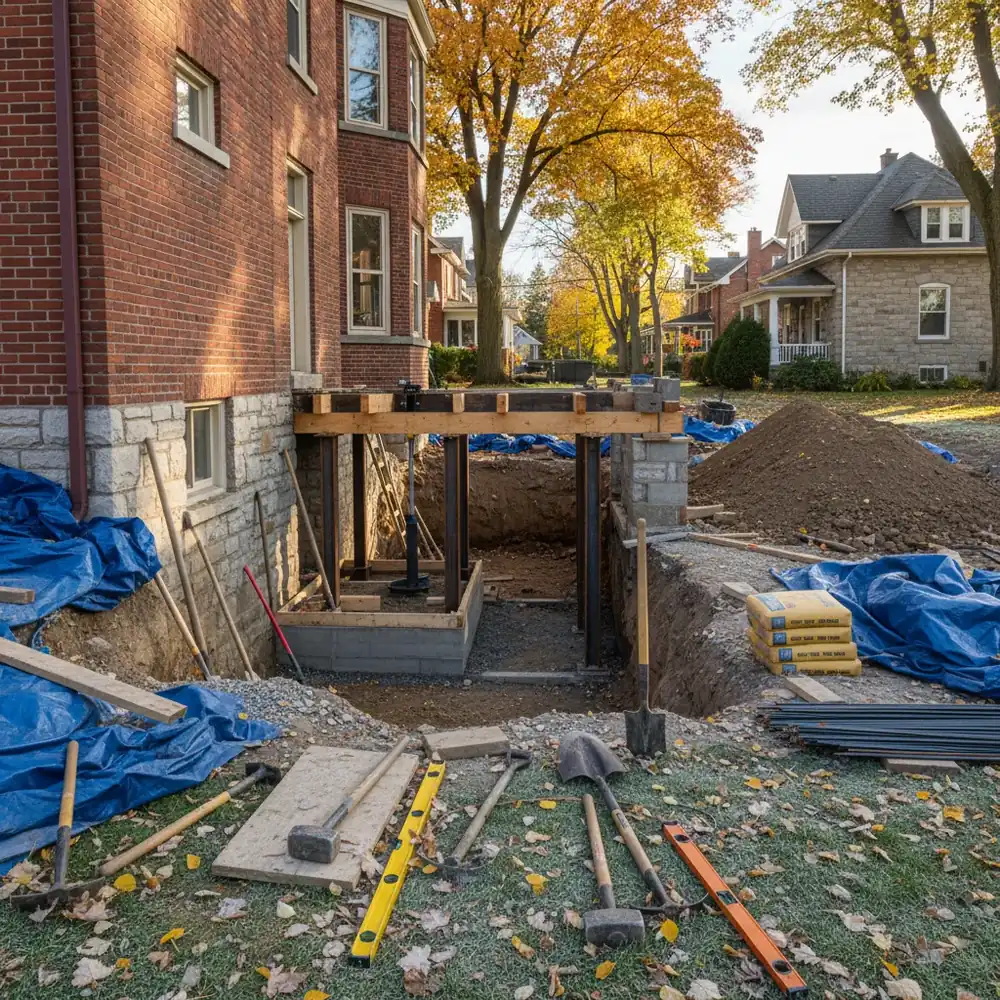
Underpinning solves two very different problems. The first is settlement: when part of a foundation sinks (doors racking out of square, stair-step cracks, sloping floors), steel piers driven to load-bearing strata transfer the house's weight off the failing soil and can often lift it back toward level.
The second is headroom: Guelph's century homes often have 6-foot basements. Underpinning the footings deeper — done in engineered, permitted stages — creates legal-height living space worth real money in this market.
Both are structural engineering projects. Drawings, permits and inspections aren't red tape here; they're what makes the work bankable when you sell.
- Push/helical pier systems for settlement, with lift where achievable
- Staged underpinning for basement lowering (bench footing alternative quoted too)
- Engineer's drawings, City of Guelph permits, inspection sign-offs included in process
- Crack monitoring program when you're not sure it's moving
What it costs in Guelph
- Settlement piers: $1,500–$3,000 per pier; most jobs need 4–10
- Basement lowering (underpin): $350–$500 per linear foot
- Bench footing alternative: roughly 30–40% less, costs you floor area
- Crack monitoring (when diagnosis isn't certain): from $300/yr — cheap certainty before a five-figure decision
Underpinning & Settlement Repair FAQs
How do I know if my house is settling or just old?
All old houses are out of level; the question is whether it's progressing. We measure, set crack monitors, and re-check. Active settlement shows in months. No movement in a year usually means live with it.
Can a sunken foundation be lifted back?
Often partially — piers can recover some elevation as they're loaded. Full restoration to original level isn't always possible or wise; stabilization is the primary goal.
Do I need a permit to lower my basement?
Yes, with engineered drawings — underpinning is structural work under the Ontario Building Code. Anyone offering to do it without permits is creating an uninsurable, unsellable liability under your house.
Is bench footing as good as underpinning?
It's structurally sound and cheaper, but the concrete bench eats 18–24 inches of floor around the perimeter. Good for utility basements; underpinning is better when finished space is the goal.