Block & Stone Foundation Repair in Guelph
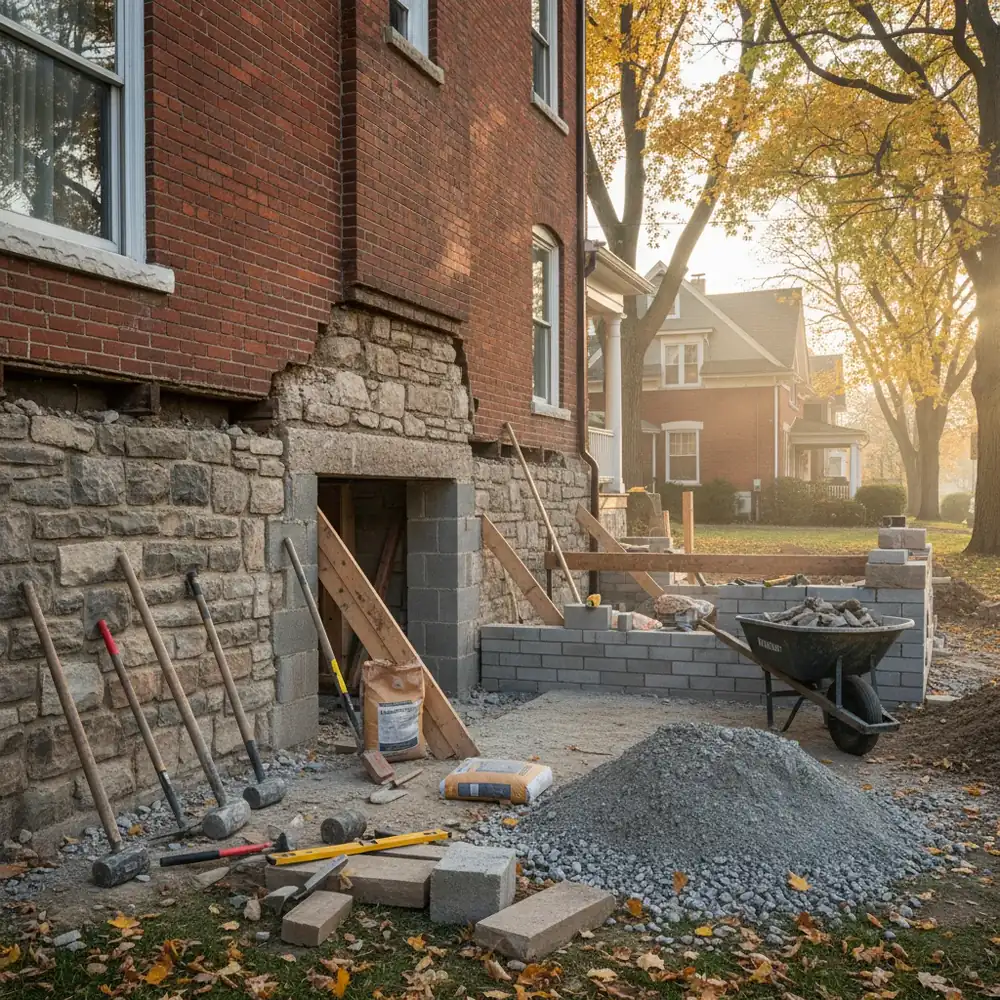
Concrete block walls fail sideways: clay soil swells against them and they bow inward, showing a horizontal crack along a mortar bed — most often in 1950s–70s Guelph subdivisions. Caught early (under an inch of deflection), carbon-fibre straps lock the wall in place. Caught late, steel braces or a section rebuild are the honest answer.
Stone foundations are a different animal: lime mortar joints erode over a century and let water seep through everywhere. The fix is raking out failed joints and repointing — with the right mortar. Hard modern Portland mortar on soft stone accelerates the damage; lime-based mixes are what these walls need.
- Carbon-fibre reinforcement for early-stage bowing
- Steel I-beam bracing for advanced deflection
- Section rebuilds where walls are past saving
- Lime-mortar repointing and parging for stone foundations
What it costs in Guelph
- Carbon-fibre straps: $450–$700 each, typically every 4 ft along the bowing section
- Steel bracing: $600–$1,000 per brace
- Block section rebuild: $200–$400 per linear foot
- Stone repointing: $15–$40 per square foot depending on joint condition
Block & Stone Foundation Repair FAQs
How urgent is a bowing block wall?
Measured in inches: under 1" of bow, plan a repair this season. 1–2", soon — the wall is actively failing. Over 2", get it assessed this week and keep heavy vehicles off the soil outside it.
Why is there white powder on my stone foundation?
Efflorescence — minerals left behind by water migrating through the wall. Harmless itself, but it's proof of moisture movement, and on stone it often means joints are due for repointing.
Can I parge over a deteriorating stone wall?
Parging over failed joints traps moisture and pops off within a few winters. Repoint first, then parge if you want the finished look.
What causes block walls to bow in Guelph specifically?
Our clay-loam soil swells when saturated — bad grading, short downspouts and clogged weeping tile keep that soil wet and pushing. Every bowing-wall repair should include fixing the drainage that caused it.