Exterior Basement Waterproofing in Guelph
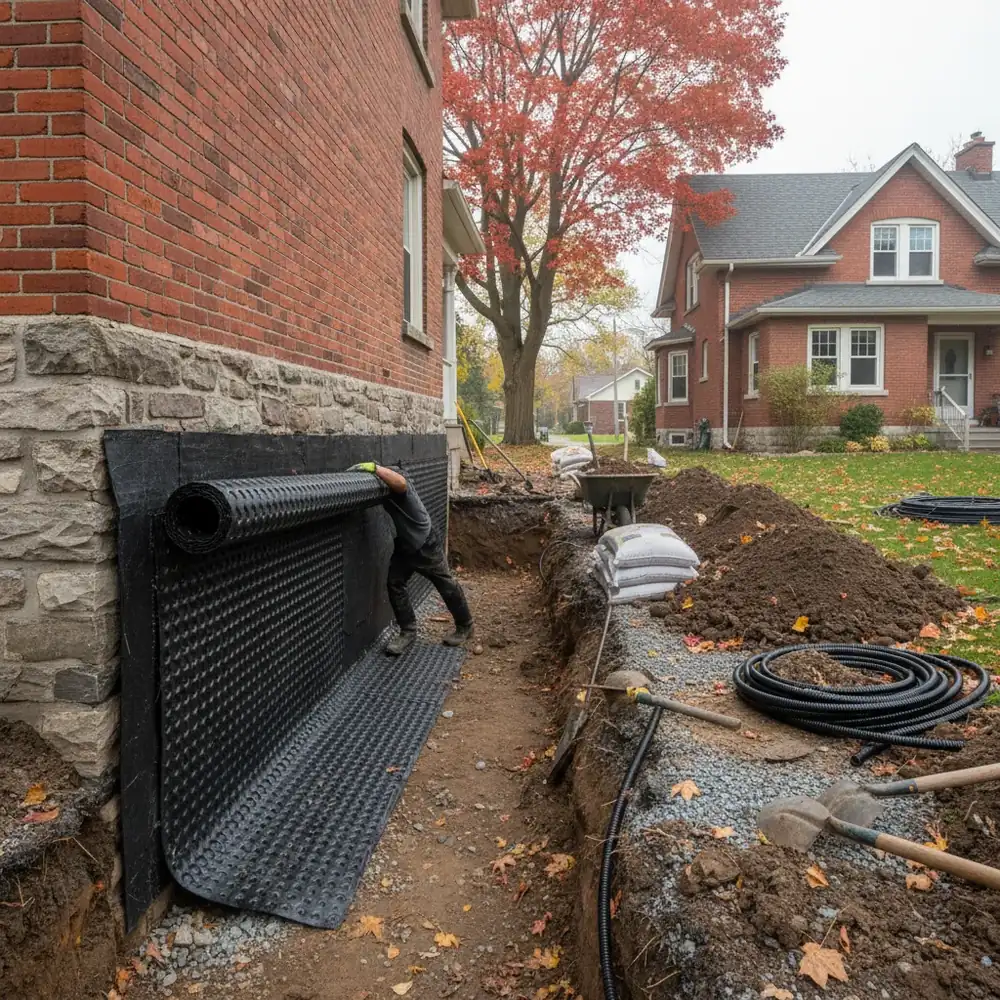
When a basement leaks at multiple points — along the floor joint, through several cracks, damp patches after every rain — the original damp-proofing and weeping tile have reached end of life. The durable fix is from outside: excavate to the footing, clean and repair the wall, apply a rubberized membrane with drainage board, and replace the weeping tile so water has somewhere to go.
It's the most invasive thing we do, which is exactly why we don't recommend it when a $500 injection solves the actual problem. When it is needed, sections can often be done (the wet wall, not the whole perimeter) to keep cost sane.
- Excavation to footing with care for landscaping and services
- Rubberized membrane + dimpled drainage board
- New weeping tile, gravel bed, and proper backfill compaction
- Window well drains and grading corrected while we're there
What it costs in Guelph
- Single wall section: $2,500–$8,000
- Full perimeter (typical Guelph detached): $15,000–$30,000
- Interior drainage alternative (where excavation isn't possible): $4,000–$12,000
- Get the drainage diagnosis first — sometimes regrading and downspout extensions solve 80% of the problem for hundreds, not thousands
Exterior Waterproofing FAQs
Exterior or interior waterproofing — which is better?
Exterior stops water from touching the wall: the gold standard. Interior systems manage water that gets in — cheaper, and right where excavation is impossible (additions, shared walls). An honest contractor will tell you which your situation calls for.
How long does exterior waterproofing last?
Modern rubber membranes are rated 30+ years. The weeping tile is usually the first thing to silt up — which is why we install cleanout access.
Will you destroy my landscaping?
The excavation trench is about 3 ft wide along the wall. Plants in that zone need relocating; lawns regrow. We photograph, protect, and put hardscaping back.
Can this wait until next year?
Water against a wall over winters does compounding damage — freeze-thaw widens every path it finds. A spring leak left two more years is usually a bigger job. At minimum, fix grading and downspouts now.