Foundation Crack Repair in Guelph
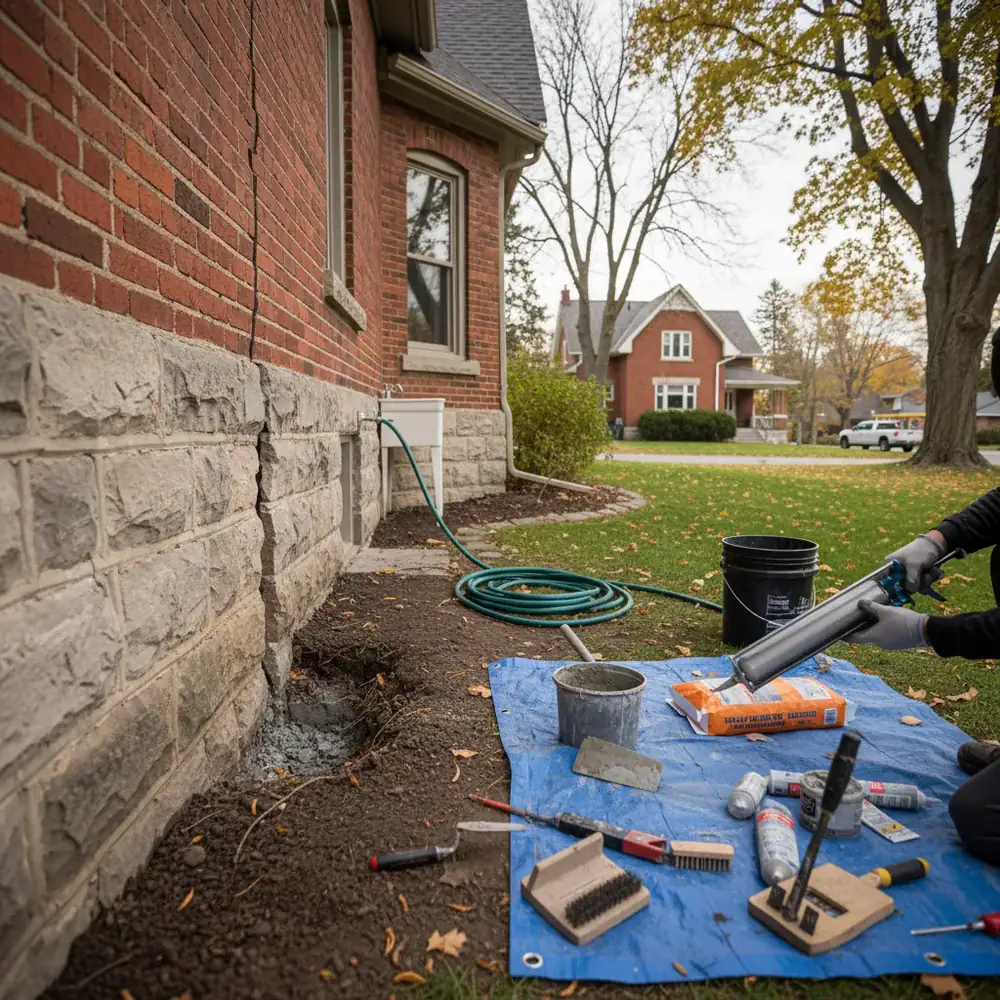
Poured concrete cracks — every foundation has some. The repair question is whether water is coming through and whether the crack is moving. Leaking cracks get polyurethane injection: the resin expands and stays flexible, sealing the full depth of the wall. Structural cracks get epoxy, which welds the concrete back to full strength.
Injection is done from the inside, takes a couple of hours per crack, and doesn't require digging up your garden. Where a crack shows movement, we add carbon-fibre staples across it so it cannot reopen.
- Polyurethane injection for active leaks (works even while wet)
- Structural epoxy injection for load-bearing cracks
- Carbon-fibre stitching across moving cracks
- Written warranty for the life of the structure
What it costs in Guelph
- Single crack injection: $400–$700
- Structural epoxy + carbon fibre: $700–$1,200 per crack
- Multiple cracks: discounted on the same visit
- If a "crack repair" quote you got involves digging outside for a simple vertical leak — get a second opinion. Injection is usually the right fix at a third of the price.
Foundation Crack Repair FAQs
Can cracks be fixed from inside, or do you have to dig?
Poured-wall cracks: inside, by injection, in most cases. Digging is for failed exterior membranes, block walls and drainage problems — not single cracks.
Will the crack come back?
An injected crack is sealed through the full wall thickness and warrantied. New cracks can appear elsewhere as a house ages — but the repaired one is done.
Does hydraulic cement work?
It's a surface plug. It often holds for a season, then water finds the edge. Injection fills the crack to the outside soil — that's the difference.
My crack is hairline and dry — should I do anything?
Photograph it with a tape measure, date the photo, and check it yearly. Dry, stable hairline cracks in poured walls are normal. We'll tell you the same thing for free rather than sell you an unneeded repair.